Thursday, October 27, 2011


I thought I would contribute to the decoding of this image. In the poster in the above image I believe the person depicted is Boyd K. Packer one of the 12 apostles of the Church of Jesus-Christ of later day saints. check the next image to see what you think.
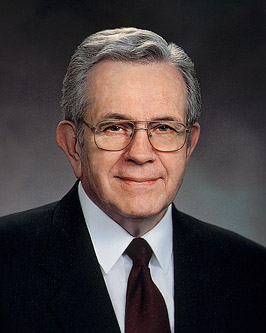
The red and blue come from one of president Obama's campaign poster for hope seen in the next image.
Obama Poster
Which could mean that this editorial cartoon is saying that there is hope for gay people if they change the way they think or it implies that gays have a choice if they are gay or not. Which is somewhat true considering that the church's view is that one may have more thoughts about same sex attraction but, does not think you have to act on it and that in essence everyone is heterosexual at their root.

It is also interesting to note that the pose of Elder Packer is similar to that of Uncle Sam's, "I want you" poster, shown below. So, does this mean that he is saying, "I want you to change and there is hope?" Maybe, maybe not. Leave your opinions in the comments.


Wednesday, October 26, 2011

10/25 Page Set-up

Here's the work that I did on the blog yesterday. Let me know if you think anything needs to be changed, adjusted, fixed or added. Also, if anyone needs help on anything let me know and I'd be glad to assist!


Introduction


Welcome to the Cooper's Troop blog on Gay Marriage -- where all false misconceptions on
the issue will be dissolved and truth will be revealed, through the depiction and analysis of
 editorial cartoons.

Why Gay Marriage?

Our group decided to do our project on gay marriage because it was a topic that we had all heard about but didn't know the facts on. As a topic, it caught our interest because of the heated debate following it in the United States. For this project we decided to take the many different subjects that gay marriage entails (such as: religion and gay marriage, proposition 8, national gay marriage hot spots, and international gay marriage policies), find the facts on these issues, and analyze how each subject is portrayed through editorial cartoons.

Mission Statement

To bring to light the truths about gay marriage and to help viewers better understand
 the tools used by editorial cartoonists in their drawings to represent an opinion.

Important Things to Understand

Before proceeding to the rest of the blog, here's a few things that you should know:

Media Effects Theories

1. Framing: a theory used by the media to present information to viewers in a certain "framed" way in order to effect the audience's way of thinking about a certain issue. Framing includes adding emphasis to certain things, leaving details out, and can be used to develop a person/organization's biased agenda. However, in the case of editorial cartoons, framing is an acceptable tool as it expresses a certain opinion on an issue. Because the frame of the picture is limited, as viewers, we must think about not only the message and opinion being portrayed, but also the context surrounding the issue - What is going on in this situation? Who and what are being portrayed in what particular way? What are the actual facts? Without all the facts, either in a cartoon or a news story, framing can cause biased misconceptions about topics that hinder our ability to think critically about both sides of an issue before making a judgement. This is why understanding framing is so important and vital to our project.

2. Cultivation: the theory that a stable set of images portrayed throughout the media have a long term effect on the way we see the world, because of how media frame an issue. With editorial cartoons, this isn't too much of a problem because there are many different cartoonists, each with their own opinion. However, cultivation could affect a person in that it could result in biased opinion if only cartoons were looked at without any outside context.

1. Humor: The use of wit, satire and humor to convey meaning in a cartoon should be understood. Almost all cartoons without fail use some sort of humor in their cartoons. Depicted images and words in cartoons, therefore, should not be taken seriously. Rather the viewer should ask why humor is being used and in what way to convey what meaning. This will help unveil what the artist is actually trying to say not only about the issue, but also about people in our society.

2. Fact: While editorial cartoons depict opinion in a comedic manner, they must still be based on fact so as not to present false information. It is these facts that readers must know in order to understand the opinion expressed in the cartoon.

3. Inform: Editorial cartoons must encourage critical thinking and try to inform readers. They are not only for pleasure. In order to fully understand editorial cartoons, the reader must look beyond the comedic content and understand what message the artist is really trying to convey. The underlying message can be revealed by analyzing what type of humor is being used and for what purpose. What meaning lies beyond the humor and why is such humor used? What people/places/things/ are depicted and why are they depicted that way? What is the background for this issue and how is it depicted in the cartoon? If the editorial cartoon does not raise such questions as well as provide factual, informational content with a comical aspect to it, the cartoon is ineffective.

Keep this in mind as you tour the rest of our blog and enjoy!

Tuesday, October 25, 2011

Project Blog

Hey everyone, I just wanted to let you know that when you go about editing, saving and publishing your pages to be sure to click "No Gadget" when it brings up 3 different options after clicking "Publish Page". If you click any of the other options it messes up the page(which it's an easy fix, just easier if it never has to be fixed). Other then that, have at the pages.

Thanks,
Bradley
Also this might be a lot of work but i think for the religion one, we should do subpages on different religions: Like christianity, Islamic, Jewish...etc
And for the proposition 8 page, we should do subpages on like other laws that resemble proposition 8 in the United states and stuff like that.
what do you think???
Can you name mine

North America
South America
Western Europe
Northern Europe

Wednesday, October 19, 2011

Team Meeting 10/18

Yesterday our team met to discuss what we wanted to focus on for our project on same sex marriage and delegate research/different tasks. The emphases we picked to focus on are 1. Proposition 8 in California 2. The Hot Spots of same sex marriage in the U.S. 3. Same sex marriage policies in other countries in comparison with the United States' policy 4. Same sex marriage and religions, plus an introduction page.


We all came into the meeting with specific editorial cartoons that we had picked and we went through each cartoon together and decided if it was positive or negative and what section it would fit under. However, we decided not to go through and code/analyze the cartoons this time as our background knowledge in these areas still needs to be built up.

After we went through each cartoon together we delegated certain topics to each group member as follows:
-Allie: Blog introduction page and assembly of the team notebook/scrapbook
-Ami: Same sex marriage policies in different countries blog page
-Bradley: Proposition 8 blog page
-Spencer: Hot spots blog page
-Travis: Same sex marriage and religion blog page.

We decided that by the time we have the next group meeting to have all of our research done and each of our individual pages up and running. The next time we meet we will then go through and code and analyze each cartoon together. This was the extent of our meeting but we got a lots done!